A small water stain behind a washing machine can become an expensive argument at move-out. The difference between a routine repair and a disputed security deposit often comes down to one thing: whether the owner can show the apartment’s condition clearly, consistently, and on time. Knowing how to document apartment damage gives landlords a defensible record, protects rental income, and makes it easier to act before a minor issue spreads.
For owners managing property in Tbilisi from abroad, documentation is not administrative busywork. It is an operating control. Your local team needs evidence to coordinate repairs, establish tenant responsibility where appropriate, and keep decisions from becoming personal negotiations.
Start Before the Tenant Moves In
The strongest damage file starts before anyone receives the keys. A move-in inspection creates the baseline against which every later claim will be measured. Without it, even obvious damage can be difficult to attribute to a tenant.
Inspect the apartment when it is vacant, cleaned, and fully furnished if it will be rented furnished. Walk through every room in the same order each time. Record the condition of floors, walls, ceilings, windows, doors, locks, appliances, plumbing fixtures, furniture, lighting, air conditioners, and balcony areas. Do not rely on broad notes such as good condition. A useful record states what is there and what condition it is in: for example, no marks on the living room wall behind the sofa, or minor scratch on the lower cabinet door.
Create a signed move-in condition report and attach a detailed inventory for furnished units. The tenant should have an opportunity to identify existing defects before or immediately after move-in. If they raise a legitimate point, update the report in writing rather than leaving it as an informal message.
Photograph the Whole Apartment, Not Just Defects
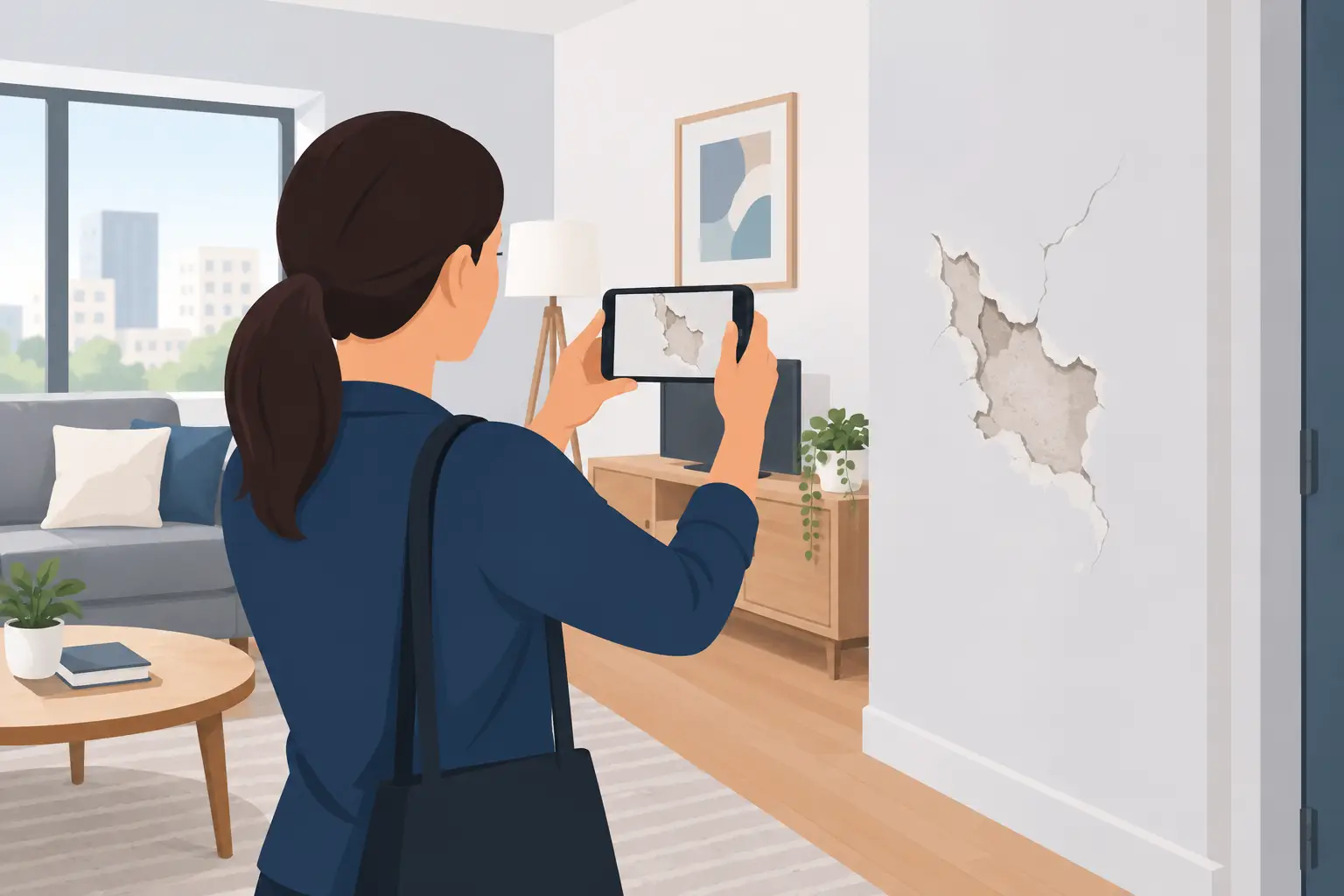
Take wide photos of each room first, then close-ups of existing wear and high-risk areas. Wide images show location and context. Close-ups show detail. Both matter when a tenant later says a photo was taken somewhere else or does not show the full condition.
Use good lighting and avoid filters, portrait mode, or image editing. Make sure original files are retained with their date and time data. Video can help show a full walk-through, but it should support photos rather than replace them. Video frames are often less clear, and reviewing a long recording during a dispute is inefficient.
For a furnished apartment, photograph each significant item individually. Include model labels or serial numbers for appliances where available. A photo of a working washing machine, oven, or air conditioner at handover can save considerable time later.
Document Damage as Soon as It Is Reported
When a tenant reports damage, acknowledge the message and create a written incident record immediately. Waiting until the next inspection allows conditions to change, repair evidence to disappear, and memories to become unreliable.
Ask the tenant to send photos and a short explanation of what happened, when they first noticed it, and whether the issue is still active. A leaking pipe, electrical smell, broken window, or water penetration from a neighboring unit needs urgent action first. Documentation should never delay steps that protect people or prevent further property damage.
Once a manager or contractor attends the apartment, their findings should be added to the file. Record the inspection date, the people present, the affected area, the apparent cause, and the immediate action taken. If the cause is uncertain, say so. A factual note such as source not yet confirmed is far more credible than assigning fault before the evidence supports it.
A complete incident file should include these distinct records:
- The tenant’s initial message and any photos or video provided
- Date-stamped photos from the manager or contractor, including wide and close-up views
- A written inspection note describing the condition and likely cause
- Repair estimates, invoices, and before-and-after photos
- All written communication about access, repairs, responsibility, and follow-up
Keep these records together under one incident reference, rather than scattering them across personal phones, email threads, and messaging apps. Remote owners need a file that can be understood without reconstructing the story from dozens of messages.
Separate Normal Wear From Tenant-Caused Damage
Not every deterioration in a rental is chargeable to a tenant. Normal wear comes from ordinary, careful use over time: lightly faded paint, minor carpet wear, or aging appliance components may be expected depending on the apartment’s age and lease period. Damage is generally tied to misuse, negligence, unauthorized alterations, or failure to report a problem that became worse.
The distinction depends on facts. A small picture-hook mark may be routine wear in one tenancy, while large holes from an unauthorized wall-mounted television may require repair. A failed faucet cartridge is usually maintenance. A broken faucet caused by force or misuse may be different. The lease terms, check-in evidence, the item’s age, and the contractor’s findings all affect the answer.
Do not treat a security deposit as automatic repair income. Deposits should be handled according to the lease and applicable local requirements, with clear evidence and itemized costs. Overcharging or making vague deductions can create a dispute that costs more time and money than the repair itself.
Use a Consistent Inspection Schedule
Move-in and move-out inspections are essential, but they are not enough for every apartment. Periodic inspections help identify leaks, mold, unauthorized occupancy, balcony issues, and appliance problems before they become major claims. The right frequency depends on the tenancy, property condition, and lease terms. Too many inspections can frustrate good tenants; too few can allow a manageable issue to become a serious expense.
Provide proper notice and schedule access in accordance with the lease. During each visit, use the same checklist and take new photos of areas that commonly develop problems: under sinks, around washing machines, bathrooms, windows, air conditioners, and balconies. If the apartment is in a new building, pay particular attention to any signs of settlement cracks, water intrusion, or defects that may relate to building systems rather than tenant conduct.
A disciplined inspection process also protects the tenant. Promptly documented maintenance requests show that the owner responded responsibly and did not ignore conditions that could affect habitability or lead to further damage.
Handle the Move-Out Inspection Without Guesswork
At move-out, compare the apartment against the signed move-in report, original photos, inventory, and any interim incident files. Conduct the inspection as close to key return as practical, ideally with the tenant present or offered the opportunity to attend. Photograph every claimed issue before cleaning, repainting, or repairing it.
Prepare an itemized move-out report that identifies the damaged item, describes the condition, cites the supporting move-in evidence, and states the expected repair or replacement cost. If a replacement is necessary, account for the age and useful life of the item. Charging a departing tenant for a brand-new replacement when the damaged item was already old can be difficult to justify.
Be precise about what is being charged. Instead of writing wall damage, write two large holes and surrounding paint damage on the bedroom wall behind the bed, requiring patching and localized repainting. Specific language signals that the decision is evidence-based, not arbitrary.
Build a System That Works When You Are Abroad
International owners should not depend on a tenant forwarding photos to a personal WhatsApp account and hope that the details are available months later. Set a standard workflow for every unit: a digital folder for the lease and move-in report, an inventory, inspection reports, maintenance tickets, photos, invoices, and move-out documents. Name files consistently with the unit, date, and event.
For example, use a format such as Unit 12B_2026-04-15_Bathroom Leak_Inspection Photos. It seems simple, but clear file naming prevents delays when an owner, manager, accountant, contractor, or legal adviser needs the same information quickly.
At Property Management Georgia, this type of record-keeping is part of protecting the asset, not an extra service added after a problem occurs. The goal is to give owners visibility while the local team handles access, vendor coordination, tenant communication, and the paperwork behind each decision.
A well-documented apartment is easier to repair, easier to lease again, and harder to dispute. When the next issue appears, act quickly, record the facts, and preserve the evidence before the condition changes.