A burst pipe at 2:00 a.m. can damage a rental apartment, disrupt neighbors, and turn a small repair into a costly insurance issue before morning. Knowing how to coordinate emergency maintenance is not about finding a technician after something fails. It is about having a controlled response that protects the tenant, the building, and your investment from the first call.
For owners living outside Georgia, the risk is greater. You may be several time zones away, unfamiliar with local vendors, and unable to verify what is happening inside the unit. A clear emergency process gives you visibility without requiring you to manage a crisis from another country.
First, Decide What Counts as an Emergency
Not every maintenance request requires an immediate contractor visit. Treating every inconvenience as an emergency raises costs, burns out vendors, and teaches tenants to bypass normal reporting procedures. But delaying a genuine emergency can expose an owner to serious property damage, tenant claims, and conflict with the building administration.
An emergency is generally a condition that threatens people, creates active property damage, or makes the apartment unsafe or unlivable. Active water leaks, flooding, electrical sparking or burning smells, gas odors, a complete loss of heating during cold weather, a blocked toilet when it is the only bathroom, and a security breach after a broken lock or door are clear examples.
A dripping faucet, a faulty appliance, cosmetic damage, or intermittent internet service usually belongs in the standard maintenance queue. There are exceptions. A refrigerator failure may become urgent if a tenant has medication requiring refrigeration, while a loss of air conditioning may require a faster response during extreme heat. Good coordination depends on judgment, not just a fixed checklist.
Give Tenants a Simple Reporting Route
Tenants should know exactly whom to contact, what information to provide, and what steps to take while help is being arranged. Confusion in the first ten minutes is where damage often grows.
Ask for the apartment address, a brief description, photos or video where safe, and confirmation of whether water, electricity, or gas is involved. The tenant should also state whether they can safely access the shutoff valve, electrical panel, or other basic control point. They should never be asked to touch exposed wiring, enter a flooded electrical area, or investigate a suspected gas leak.
For immediate life-safety threats, the instruction is simple: contact emergency services first, then notify the property manager. A maintenance response is not a substitute for police, fire, ambulance, or gas emergency services.
How to Coordinate Emergency Maintenance Without Delays
The response should follow a repeatable sequence. The goal is to stabilize the situation before arranging permanent repairs.
Start by acknowledging the report quickly. Even if a contractor cannot arrive immediately, the tenant needs to know that someone is handling the issue. A prompt response also helps establish whether the problem is worsening and whether it affects other apartments or common building systems.
Next, guide the tenant through safe damage-control actions. For a leak, that may mean shutting off the nearest water valve if it is accessible and safe, moving belongings away from the affected area, and placing containers under minor dripping. For an electrical concern, it may mean turning off power at the breaker only if there is no standing water and the panel can be reached safely. For a gas odor, the tenant should leave the property, avoid switches and open flames, and contact the appropriate emergency service.
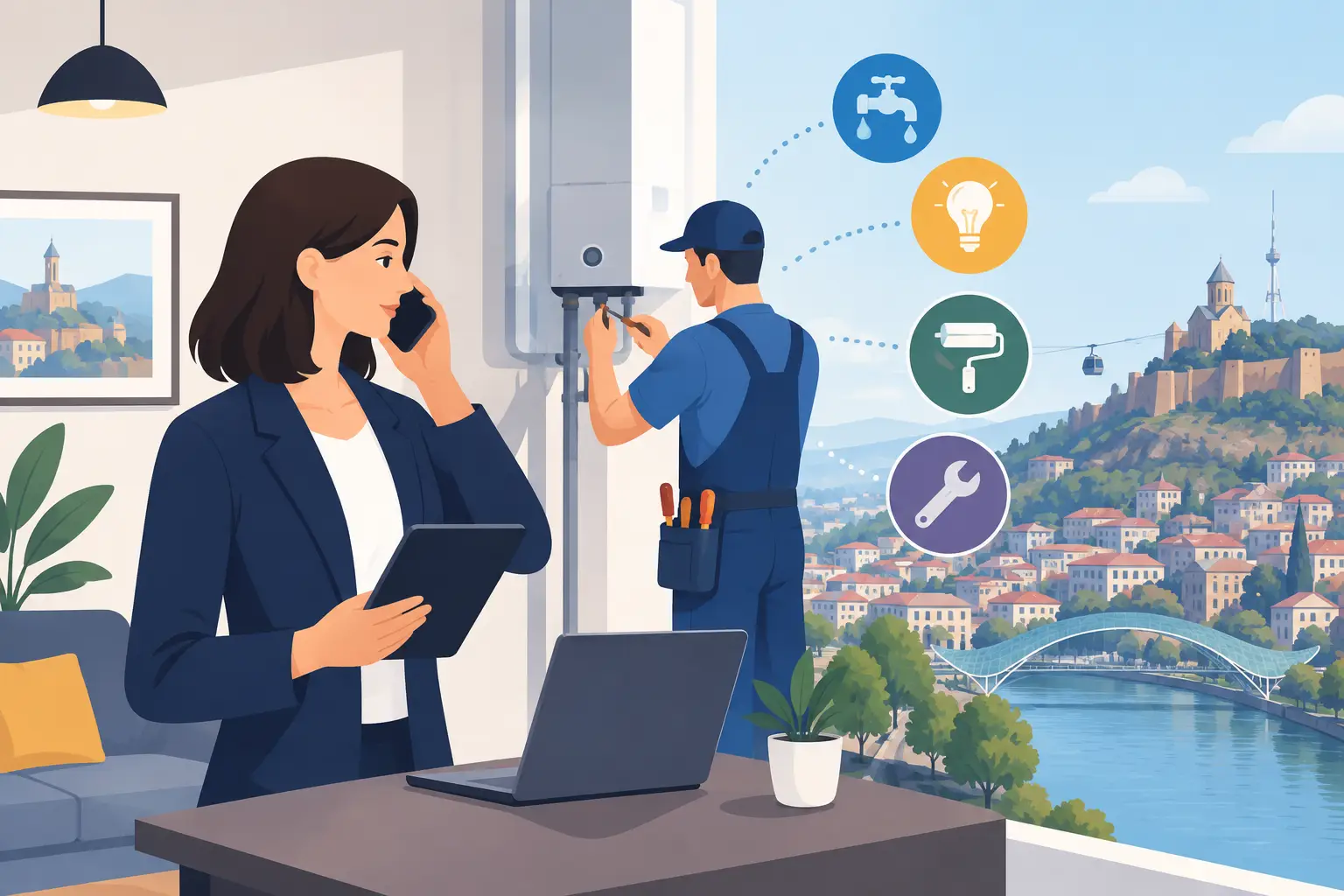
Then contact the right vendor. The fastest available person is not always the right person. A general handyman may be useful for a minor lock issue, but active flooding may require a plumber and potentially a drying or restoration team. Electrical faults should go to a qualified electrician. If water is leaking into a neighboring apartment, the building manager or homeowners association may also need immediate notification because the source could be a shared riser or another unit.
In Tbilisi apartment buildings, access and coordination with building staff can affect response time as much as the repair itself. Confirm who will meet the contractor, whether the tenant is present, and whether access to a utility room, roof, basement, or neighboring unit may be needed. A local manager who can physically inspect the situation often prevents inaccurate diagnoses and unnecessary callout charges.
Build a Vendor Network Before You Need One
Emergency maintenance is not the time to search online, negotiate pricing, and hope the provider arrives. Owners need a prequalified network that includes plumbers, electricians, locksmiths, heating and cooling technicians, appliance repair specialists, and cleaning or water-damage support.
Availability matters, but so do communication and accountability. A reliable vendor should confirm receipt of the job, provide an arrival estimate, explain the diagnosis in plain language, and document completed work. For larger repairs, request photos before and after the work, an itemized quote, and a realistic completion timeline.
Cost control still matters during an emergency. The practical approach is to authorize immediate stabilization up to a predetermined amount, then require approval for non-urgent follow-up work above that limit. For example, stopping a leak cannot wait for an owner abroad to wake up and approve a small service call. Replacing cabinets, flooring, or a water heater may require a quote and a clearer decision once the source of damage is contained.
This balance protects the asset without giving vendors an open-ended budget. It also gives tenants confidence that urgent issues will be addressed rather than delayed by administrative back-and-forth.
Keep the Tenant Informed Until the Issue Is Closed
Tenants do not need every internal detail, but they do need practical updates. Tell them who is coming, the expected arrival window, whether they should remain at the property, and any temporary restrictions. If water must be shut off or a repair will continue into the next day, explain that early.
Clear communication reduces frustration and avoids repeated calls. It also creates a written record showing that the issue was addressed responsibly. When a repair affects habitability for more than a short period, assess the facts carefully. A temporary accommodation, rent adjustment, or other solution may be appropriate depending on the condition, the lease, and applicable requirements. Do not promise compensation before understanding the scope and cause of the problem.
Once the emergency repair is complete, confirm that the tenant can use the affected system safely. A contractor saying the job is finished is not always enough. Ask whether the water is restored, the lock operates, the heating is functioning, or the electrical issue has stopped. If drying, painting, or replacement work remains, provide the next steps instead of treating the first visit as final closure.
Document the Event Like an Owner
Every emergency should produce a clean file. Record when the tenant reported the issue, what they reported, the instructions given, vendor arrival and departure times, photos, invoices, approvals, and the final resolution. Note whether the problem was caused by normal wear, a building system failure, tenant misuse, or a third party.
This documentation supports insurance claims, helps recover costs where appropriate, and identifies recurring weaknesses in the property. A second plumbing emergency in the same bathroom may point to more than bad luck. It may indicate aging hoses, poor prior repairs, inadequate waterproofing, or a building-level issue that needs escalation.
For portfolio owners, these records also reveal where preventive spending makes sense. Replacing a failing water heater before it leaks may be cheaper than paying for an emergency plumber, damaged flooring, cleaning, lost rent, and tenant dissatisfaction later.
Turn Emergencies Into Preventive Maintenance Decisions
The best emergency response program reduces the number of emergencies over time. After each event, ask what would have prevented it and who is responsible for the next action. Schedule inspections of flexible water hoses, shutoff valves, electrical panels, heating equipment, locks, sealants, and appliances between tenancies or during planned visits.
Property Management Georgia coordinates the people, access, communication, and documentation that remote owners need when a rental problem cannot wait. The value is not just sending a vendor. It is making sure the correct action happens quickly, costs are controlled, and the condition of your asset is verified.
A well-managed emergency should end with more than a repaired problem. It should leave your property safer, your tenant better informed, and your next maintenance decision easier to make.