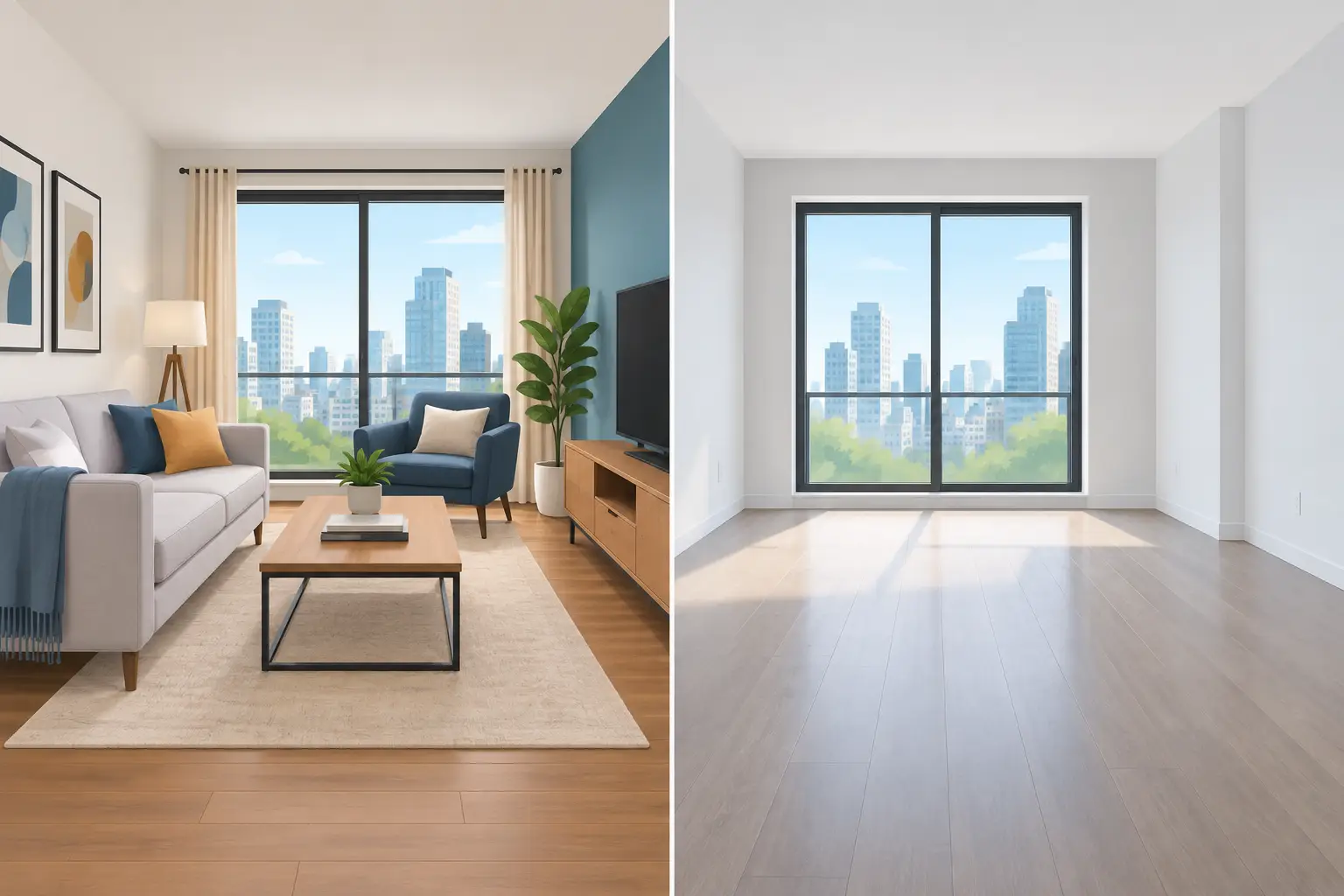
A vacant apartment costs money every day it sits empty. But buying the wrong furniture package, or furnishing a unit that attracts the wrong tenant profile, can also weaken returns. The choice between furnished versus unfurnished rental apartments is not a design decision. For a Tbilisi investor, it is an operating decision that affects rent level, tenant turnover, maintenance exposure, and the time required to keep the property performing.
The right answer depends on the apartment’s location, target tenant, building quality, and your intended holding strategy. A furnished unit can lease faster and command a higher monthly rate. An unfurnished unit can reduce replacement costs and often support longer tenancies. The goal is not to follow a general rule. It is to match the setup to the income strategy.
Furnished Versus Unfurnished Rental Apartments in Tbilisi
Tbilisi has a broad rental market. International professionals, remote workers, students, embassy staff, corporate tenants, and relocating families often need a ready-to-live-in apartment. Many arrive without household goods and want a lease that begins immediately. In central neighborhoods and well-positioned new developments, furnished apartments are frequently the practical choice.
At the same time, local long-term tenants and families may prefer to bring their own furniture, particularly when they expect to remain in the property for several years. They may value a lower monthly payment, more control over their home, and the ability to use their own appliances or furnishings.
For an owner managing from abroad, the important question is simple: which model produces the most reliable net income after vacancy, repairs, furnishing costs, and management time? Gross rent alone does not answer that question.
When a Furnished Apartment Makes Financial Sense
A furnished apartment is usually strongest when the property is aimed at tenants who prioritize speed and convenience. This includes expats on fixed-term assignments, foreign professionals, digital workers, and tenants renting for one year or less. A well-equipped unit removes a major barrier at the viewing stage. The tenant can picture moving in quickly, rather than calculating the cost and effort of buying a bed, sofa, dining table, washer, and kitchen equipment.
In the right location, furnishing can improve both rent and leasing speed. A clean, cohesive apartment with functional appliances may stand out against competing listings that feel incomplete or poorly maintained. This matters most in buildings where multiple similar units are available at the same time.
However, furnished does not mean over-furnished. Investors sometimes spend too much on decorative items that do not increase rent or create a better tenant experience. The better approach is durable, neutral, and easy to replace. A quality mattress, practical seating, blackout curtains, adequate storage, reliable air conditioning, and a complete kitchen generally matter more than expensive décor.
The Operating Cost Behind Higher Rent
A furnished apartment carries more inventory and more responsibility. Every chair, appliance, lamp, remote control, and kitchen item can become a maintenance issue. Small damages add up when there is no clear inventory process, and turnover can require cleaning, repairs, linen replacement, and condition checks before the next tenant arrives.
This does not make furnished rentals a bad investment. It means the premium rent must exceed the additional operating cost. Owners should budget for periodic furniture replacement, appliance repairs, professional cleaning between tenancies, and occasional losses from damaged or missing items.
A detailed move-in inventory is essential. It should document furniture, appliance condition, keys, remotes, meters, and visible defects. Photos and signed handover records give the owner a clear basis for deposit discussions at move-out. Without this documentation, a furnished rental can turn routine wear into a dispute.
When an Unfurnished Apartment Is the Better Asset Strategy
An unfurnished apartment can be a disciplined choice for investors seeking lower turnover and fewer operational variables. Tenants who move in with their own furnishings are often making a longer-term commitment. They have invested effort in settling into the home, which can reduce frequent move-outs and the vacancy periods that follow.
The owner also has fewer items to maintain. There are still core responsibilities, including plumbing, electrical systems, built-in appliances, heating, and structural issues. But there is no need to replace a stained sofa, missing cookware, broken dining chairs, or worn-out mattresses after each tenancy.
This model can work especially well for larger apartments aimed at families, units outside the most transient central rental zones, and properties where the rent premium for furnishing is too small to justify the capital outlay. It may also suit an owner who wants stable occupancy and simple long-term operations rather than maximizing the advertised monthly rent.
Do Not Mistake Unfurnished for Unprepared
In Tbilisi, “unfurnished” can mean different things to different tenants. Some tenants expect an empty apartment. Others expect a fitted kitchen, wardrobes, curtains, lighting, air conditioning, and major appliances even if beds and living-room furniture are not supplied.
The lease and listing must be precise. State what is included, what belongs to the tenant, and who is responsible for repairs. Ambiguity creates conflict. A tenant should not discover at move-in that an apartment described as unfurnished lacks essential fittings they reasonably expected.
For many investors, a partially furnished approach is the practical middle ground. Providing built-in storage, kitchen appliances, washing machine, curtains, lighting, and air conditioning can make an apartment leaseable while leaving movable furniture to the tenant. This can reduce setup cost without making the unit feel bare.
Compare Net Income, Not the Asking Rent
A furnished unit may rent for more, but the relevant calculation is net income over a full year or longer. Start with realistic rent for each setup, then account for expected vacancy, furnishing cost, replacement reserve, cleaning, utilities during turnover, and maintenance coordination.
For example, a furnished apartment may produce a higher monthly rate but experience more frequent tenant changes. An unfurnished unit may rent for less yet retain one reliable tenant for multiple years. The second option can produce steadier cash flow and lower stress, even if its listing price looks less impressive.
Also consider the cost of capital. If furnishing a unit requires a substantial upfront investment, calculate how many months of additional rent are required to recover that amount. If the market cannot support a meaningful premium, keep the setup lean. Furniture should earn its place in the apartment.
Match the Apartment to Its Tenant Profile
The property itself provides useful direction. A compact one-bedroom near business districts, metro access, restaurants, and international offices is often well suited to a furnished strategy. A two- or three-bedroom apartment in a residential area may be better positioned for a family seeking a stable long-term home.
Building condition matters as well. A new-build apartment with modern common areas, reliable elevators, security, parking, and quality finishes may attract tenants willing to pay for a complete furnished package. An older unit may still perform well, but an expensive furniture package cannot compensate for unresolved building or maintenance problems.
Before purchasing furniture or marketing the apartment, review competing listings in the immediate area. Compare not only rent prices but also how long comparable units remain available, what amenities they offer, and which tenant types they appear to target. Local leasing data is more useful than assumptions based on another city.
Protect the Asset With Clear Lease Terms
Whether the unit is furnished or unfurnished, strong tenant screening and lease terms protect the investment. Verify income, employment or business activity, rental purpose, intended occupants, and expected lease duration. A higher rent is not worth accepting a tenant who cannot sustain the payment or will create avoidable property damage.
For furnished units, the lease should address the inventory, deposit conditions, guest and subletting rules, utility obligations, repair reporting, and access for urgent maintenance. For unfurnished units, clarify responsibility for tenant-owned appliances or furniture and the condition in which the unit must be returned.
Property Management Georgia treats this as an operating system, not a one-time leasing task. The right tenant, documented handover, responsive maintenance coordination, and consistent rent follow-up are what turn an apartment into a dependable income-producing asset.
Choose the Setup You Can Manage Consistently
Furnished rentals can be a strong income tool in the right Tbilisi location, particularly when the apartment is positioned for international or mobile tenants. Unfurnished rentals can offer lower complexity and more stable long-term occupancy. Neither option is automatically better.
Choose the model that fits the unit, the local tenant demand, and the level of turnover and maintenance you are prepared to manage. Then set the apartment up with a clear standard, price it based on real market evidence, and protect every lease with disciplined documentation. That is how a rental property keeps producing after the first tenant moves in.