
A security deposit dispute usually starts long before move-out. It starts with a vague lease, a rushed handover, missing photos, or a tenant who was never a strong fit in the first place. If you own rental property in Tbilisi and want fewer surprises, the best ways to protect rental deposit money are operational, not theoretical. You protect the deposit by controlling the tenancy from day one.
For remote owners and investors, that matters even more. When you are not local, small gaps in documentation turn into costly arguments, delayed turnovers, and lost rent. A deposit should help cover real damage or unpaid obligations. It should not become a gray area that drains time and cash flow.
Best ways to protect rental deposit money start before move-in
The deposit is only as secure as the system around it. Many owners focus on the amount they collect, but the real protection comes from process. A larger deposit does not fix weak tenant screening or poor records. In some cases, asking for too much can even reduce your tenant pool and increase vacancy.
A better approach is to build a clean chain of evidence and accountability from listing to move-out. That means choosing the right tenant, writing terms that leave less room for interpretation, and documenting the property in a way that would hold up if challenged.
Screen for stability, not just speed
The fastest way to put a deposit at risk is to approve the wrong tenant because the unit has been sitting vacant. A weak tenant can create damage, payment issues, and enforcement headaches that a deposit may only partly cover. That is why screening should focus on income reliability, rental behavior, identity verification, and communication quality.
For overseas owners, this is one of the biggest blind spots. It is easy to rely on surface-level impressions when you are managing from abroad. A local team that verifies documents, asks hard questions, and checks practical fit can reduce the chance of a tenancy going sideways. Deposit protection starts with tenant selection because prevention is cheaper than recovery.
Write lease terms that leave little room for debate
If the lease is vague, the deposit becomes negotiable by default. The agreement should clearly state what the deposit covers, what counts as damage versus normal wear, how cleaning expectations are handled, which utility or rent balances can be deducted, and what move-out procedure the tenant must follow.
This is where many landlords lose leverage. They use generic lease language that sounds fine until a dispute appears. Then every sentence becomes open to interpretation. Strong lease drafting does not need to be complicated, but it does need to be specific. If repainting is only chargeable when damage goes beyond ordinary use, say so. If keys, access cards, furniture condition, or unpaid building fees matter, include them.
Document the property like you expect a dispute
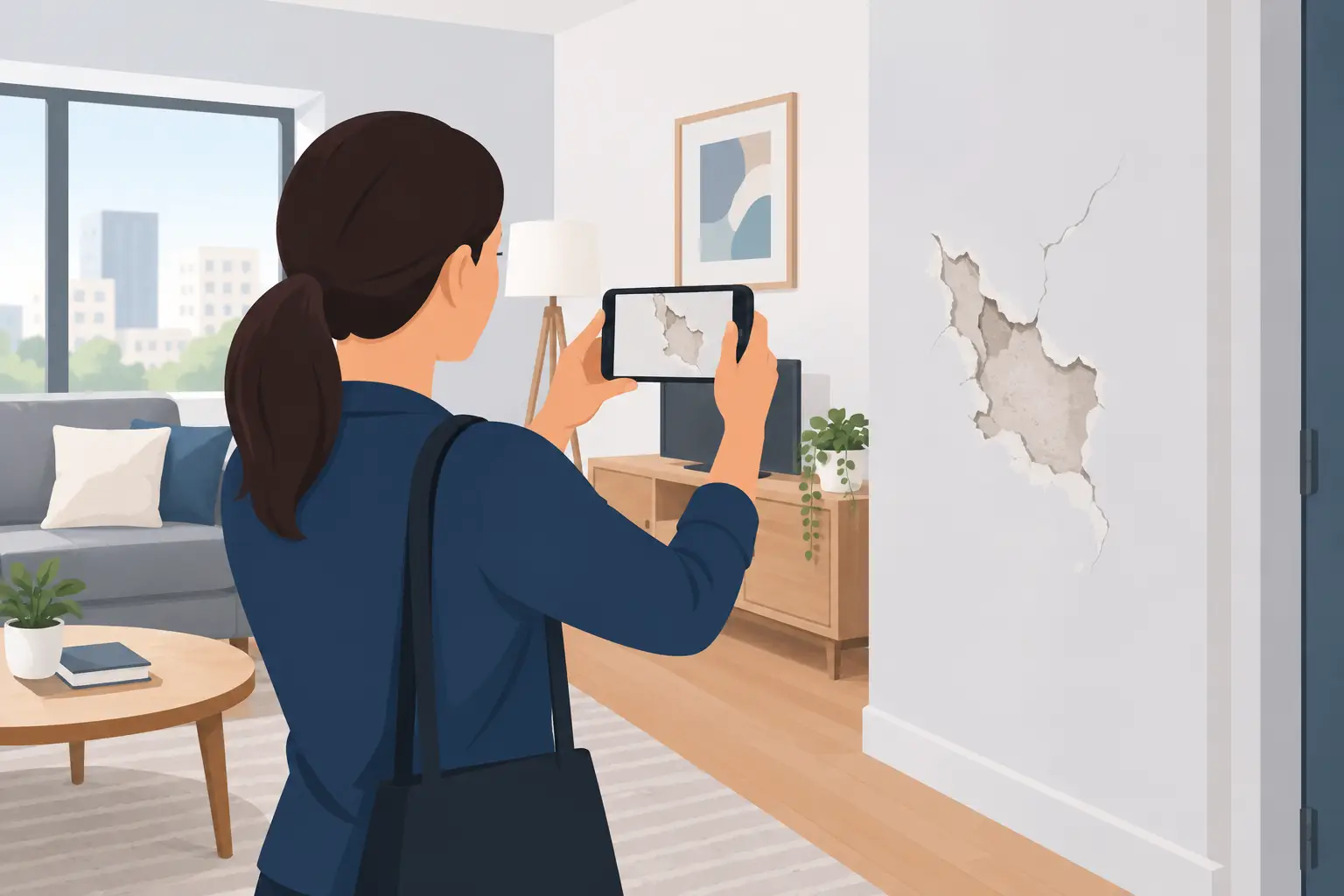
A deposit claim is much easier to defend when the starting condition is clear. Without that baseline, even legitimate deductions can become difficult to prove. Photos alone help, but a proper move-in record is stronger when it combines timestamped images, video, and a written inventory or condition report signed by both parties.
In furnished apartments, this is critical. Many investor-owned units in Tbilisi are rented fully or partly furnished, which increases the number of items that can be damaged, replaced, or disputed. Appliances, upholstery, cookware, mattresses, curtains, and small electronics should not be treated as informal extras. If they are in the unit, they should be listed and recorded.
Make move-in and move-out inspections a formal process
Inspections should never be casual walk-throughs. At move-in, every room, surface, appliance, and supplied item should be checked against the condition record. At move-out, the same structure should be used again so differences are easy to identify.
Consistency matters more than length. When inspections follow the same format every time, owners avoid selective memory and emotional arguments. The conversation stays focused on evidence. That protects the deposit and usually speeds up resolution, which helps get the unit back on the market faster.
Hold and track the deposit with disciplined records
One of the best ways to protect rental deposit funds is simple bookkeeping. Record the amount received, the date, the payer, the lease it belongs to, and any later adjustments. Keep payment confirmations, signed agreements, inspection reports, invoices, repair quotes, and move-out communications in one place.
This sounds basic, but poor record-keeping is a common reason owners fail to recover valid costs. If a tenant challenges a deduction, you need more than memory. You need a file that tells the full story. That is especially important when multiple people are involved in management, maintenance, or accounting.
Remote investors often underestimate how quickly records become fragmented. A few messages on WhatsApp, a photo on one phone, an invoice in email, and a verbal instruction to a contractor may feel manageable until there is a claim. Centralized records turn a messy situation into a straightforward one.
Use repair invoices and market-based costs
Deposit deductions should be tied to actual, supportable costs. Inflated charges create friction and can make an otherwise valid claim look unreasonable. If a repair is needed, document the issue, obtain the invoice, and keep the scope tied to the damage caused by the tenant.
There is a practical balance here. Owners should not absorb tenant-caused damage just to avoid a difficult conversation, but they also should not use the deposit to fund upgrades or full replacements when a targeted repair would do. Fairness is not just ethical. It is operationally smart because it reduces resistance and protects your reputation in the market.
Best ways to protect rental deposit outcomes during the tenancy
Deposit protection does not stop after move-in. The way the property is managed during the lease has a direct effect on the condition at handover. Unresolved maintenance issues can worsen and then become harder to attribute. Poor communication can lead tenants to make unauthorized fixes or hide problems until they are expensive.
That is why active management matters. Routine check-ins, fast repair coordination, and clear tenant communication all reduce end-of-lease conflict. If a leak is addressed early, the final issue may be a minor patch instead of damaged flooring and mold. If the tenant knows how to report problems and gets timely responses, they are less likely to let conditions deteriorate.
Treat tenant communication as risk control
Many deposit disputes are really communication failures wearing a financial label. Tenants are more likely to cooperate at move-out when expectations have been clear throughout the lease. Reminders about notice periods, cleaning standards, key return, utility settlement, and final inspection timing can prevent unnecessary deductions and arguments.
This is where execution beats theory. A hands-on local manager can enforce process, keep written records, and manage difficult conversations professionally. For owners who are abroad or simply do not want to chase details, that control protects both the deposit position and the income stream.
Know where deposits fall short
A deposit is a useful risk-control tool, but it is not full insurance. Serious damage, prolonged nonpayment, or legal enforcement costs can exceed the amount held. That is why owners should not view the deposit as the only safeguard. Better leasing strategy, stronger screening, and active oversight do more to protect returns than simply collecting a larger sum.
There is also a market reality to consider. Very strict deposit demands can make a listing less competitive, especially in segments where tenants compare multiple similar units. The right answer depends on the property type, target tenant profile, furnishing level, and expected lease term. A premium furnished apartment may justify tighter controls than a simpler long-term unit, but even then, process matters more than pressure.
For many investors, the best result comes from combining sensible deposit terms with professional local management. That is how deposit protection becomes part of a larger system built to reduce vacancy, control damage, and keep documentation clean. Property Management Georgia works in that operating mindset because owners do not need more advice from a distance. They need someone on the ground protecting the asset in real time.
If you want your deposit to do its job, do not wait for move-out to get serious. Set the tenancy up correctly, document everything worth defending, and manage the property like every missing detail will cost you later.