
You buy a Tbilisi apartment, you list it, you get a tenant fast – and then the distance starts charging interest.
It usually doesn’t blow up on day one. It shows up as a “small” delay on a repair, a tenant who is always a little late, a utility bill you didn’t realize was your responsibility, or a vacancy that lasts two extra weeks because nobody is on the ground to push it across the finish line. Remote ownership can work extremely well in Tbilisi, but only if you run it like an operation, not a side project.
Below are the top mistakes remote landlords make in Tbilisi, why they happen, and what to do instead if your goal is the same as ours: maximize returns, minimize risks.
The top mistakes remote landlords make in Tbilisi
1) Treating “rents on paper” like cash in your account
Tbilisi rental numbers can look great in a spreadsheet, especially around newer builds and central neighborhoods. The mistake is underwriting the deal on an optimistic long-term rent, then discovering that the real driver of returns is stability: how quickly you place a qualified tenant, how long they stay, and how little friction exists around payments, repairs, and renewals.
If your pricing is too high, you don’t just lose a month – you often attract the wrong kind of applicant. If you price too low, you can fill quickly but leave money on the table for a year. The right approach is to price for speed and quality, not ego. Sometimes that means starting slightly below peak and pushing rent at renewal once the tenant has proven reliable.
2) Running tenant screening like a checkbox
Remote owners often rely on “they seemed nice” plus a deposit. In Tbilisi, where tenant profiles can vary widely (local professionals, expats, short-term corporate placements), screening needs to be disciplined and consistent.
The most expensive tenants are not always the ones who stop paying immediately. They are the ones who pay inconsistently, stress the unit, and create ongoing conflict – the slow bleed that destroys your time and your net yield. Screening should verify identity, income or financial capacity, rental history where possible, and the story behind the move. When something doesn’t add up, you want a local operator willing to say no, even if it means a few extra days of vacancy.
Trade-off: stricter screening can slightly lengthen leasing time. That delay is often cheaper than a problem tenancy you can’t manage from another time zone.
3) Using a generic lease that doesn’t match how the property actually runs
A lease is only useful when it’s enforceable and aligned with real operational reality. Remote landlords commonly copy a template, translate it, or accept whatever the tenant proposes. The result is ambiguity around payment dates, penalties, utility handling, maintenance responsibility, notice periods, guest rules, pets, smoking, and what “normal wear and tear” means.
In practice, the lease is your playbook for handling conflict without emotion. If the lease doesn’t clearly define timelines, responsibilities, and remedies, you will negotiate every issue from scratch – and the tenant will learn quickly that you’re far away.
A strong lease is not about being aggressive. It’s about removing gray areas so the tenant knows what to expect and your local team can enforce standards consistently.
4) Underestimating how fast small maintenance issues become expensive
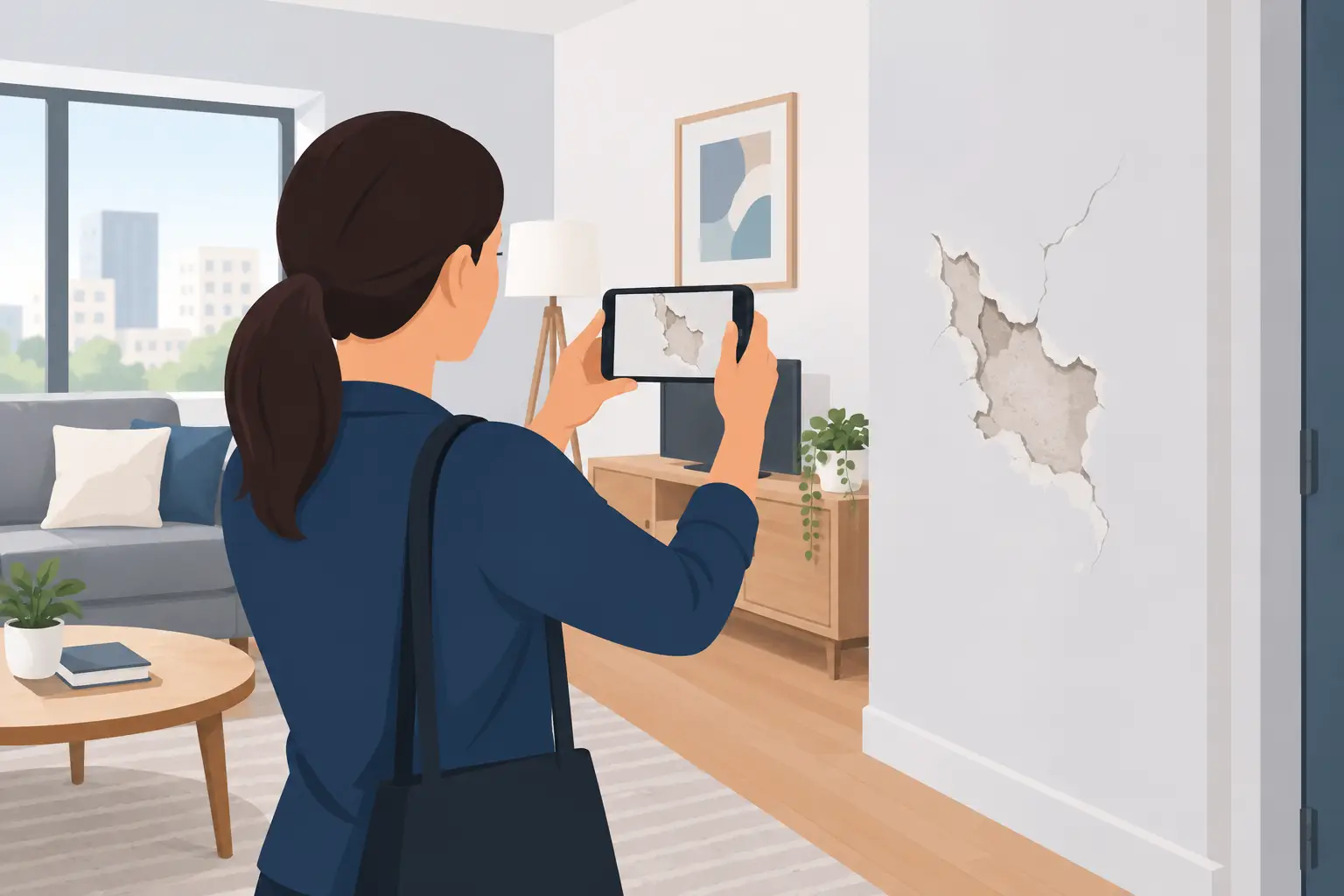
Tbilisi apartments – even in new-build complexes – need active oversight. A leaking connection under a sink, a water heater that isn’t serviced, a poorly installed AC drain line, or minor electrical issues can turn into mold, damaged flooring, and tenant disputes if ignored.
Remote owners often wait for the tenant to report issues, then try to manage vendors through messages. That delay is the real cost. Good maintenance is not just “fixing things.” It’s triage, speed, documentation, and preventing repeat failures.
The better model is to treat maintenance like asset protection. You want someone who can inspect, diagnose, coordinate repairs, confirm completion, and keep photo records. Done correctly, maintenance improves retention and protects resale value. Done reactively, it becomes a recurring hit to cash flow.
5) Assuming the tenant will handle utilities and building rules without supervision
Utilities and building management in Tbilisi can be straightforward, but they are not “set it and forget it,” especially when tenants change. Remote landlords get surprised by unpaid balances, accounts that were never transferred properly, or misunderstandings about what the rent includes.
The same goes for building rules. Newer complexes may have their own procedures for move-ins, renovations, elevator protection, noise policies, and security access. If your tenant violates building rules, the building manager won’t email you politely. They will complain, fine, restrict access, or create friction that makes your property harder to rent.
Operationally, you want clear processes at move-in and move-out, plus ongoing checks that bills are current and the tenant is following building standards.
6) Letting vacancy drag because “it’s listed online”
Listings don’t lease apartments. Follow-up, showings, negotiation, and decision-making lease apartments.
Remote landlords often underestimate how competitive the market can be at the unit level. A tenant may tour three similar apartments in one afternoon. If your property can’t be shown quickly, if nobody answers messages immediately, or if you take two days to approve an applicant, you lose.
Vacancy also drags when the unit isn’t presented correctly. Lighting, cleanliness, staging, functional appliances, strong photos, and accurate descriptions all matter. If you’re remote, you need someone on the ground who treats leasing like a pipeline with daily activity, not a passive posting.
7) Mixing long-term and short-term strategies without a plan
Some owners buy in Tbilisi thinking they will “try Airbnb later” or do short-term in peak months and long-term in off-season. That can work, but only if the unit, the building, and your operational capacity support it.
Short-term rentals require frequent cleaning, linen management, check-in coordination, guest communication, and tighter wear-and-tear controls. They also introduce different regulatory and neighbor relations risks, depending on the building.
Long-term rentals trade some upside for stability and lower operational intensity. The mistake is drifting between strategies based on hope rather than numbers and capability. Pick a plan for the next 12 months, then execute it consistently.
8) Neglecting documentation until there’s a dispute
Remote landlords often don’t have clean records until they urgently need them: move-in condition photos, signed acceptance of inventory, repair history, payment ledger, and written communication logs.
When a dispute happens – damage claims, deposit disagreements, non-payment, early termination – the outcome usually favors the party with better documentation and faster local execution. Documentation also protects the good tenants because it keeps expectations clear and prevents emotional arguments.
A disciplined system includes condition reports, dated photos, repair approvals, invoices, and a simple timeline of events. This is not bureaucracy. It’s risk control.
9) Waiting too long to act on non-payment or repeated violations
Distance makes avoidance easy. You tell yourself the tenant will catch up next week. You accept partial payments without a formal plan. You overlook repeated complaints from neighbors because you don’t want the headache.
In reality, delays compound. The longer you wait to respond to non-payment or lease violations, the more you train the tenant that enforcement is optional. If escalation becomes necessary, you also lose valuable time.
This is where a local, execution-driven approach matters. You want firm communication, documented notices, and a clear escalation path. Sometimes the best outcome is getting the tenant back into compliance. Other times, protecting the asset means moving toward termination and eviction steps promptly, following local requirements.
What “hands-off” should actually look like
Hands-off doesn’t mean absent. It means you have a local operator who runs the property with the same standards you would use if you lived in Tbilisi – but with better systems and faster response.
At a minimum, that includes disciplined tenant selection, a lease that matches real-world operations, rent collection follow-up, maintenance coordination with proof of completion, and clean reporting so you always know the unit’s status. If you want remote ownership to feel calm, you need fewer surprises, not more optimism.
If you want one accountable team on the ground for leasing, tenant management, maintenance, and tough situations when they arise, Property Management Georgia is built for exactly that kind of ownership.
The closing thought to keep in mind is simple: in Tbilisi, your property will perform in proportion to how quickly and consistently someone local can make good decisions on your behalf. Pick the standard first, then build the operation around it.